When your child is in the middle of a meltdown — tears running, voice cracking, hands clenching — the last thing they want to hear is "just breathe."
And yet, breathing is genuinely one of the most powerful tools a child can have. Not because it's magic. But because it works with the nervous system in a way that nothing else quite can.
The problem isn't breathing itself. It's that most kids are handed the instruction without the how. "Take a deep breath" means nothing to a seven-year-old who can't feel the difference between a chest breath and a belly breath, or who's never practised when things are calm.
That's what this article is about. Five techniques that are simple enough to learn in five minutes — and powerful enough to actually help when it counts.
Why Breathing Works (The Short Version)
When a child feels anxious or overwhelmed, their nervous system shifts into fight-or-flight mode. Their heart rate rises. Their breathing becomes shallow and fast. Their thinking brain — the prefrontal cortex — essentially goes offline.
Slow, deliberate breathing activates the parasympathetic nervous system — the "rest and digest" side. It signals to the brain: we are safe. Heart rate drops. Muscles soften. Thinking comes back online.
The science here is solid. Studies consistently show that slow breathing at around five to six breaths per minute activates the vagus nerve and dramatically reduces physiological markers of stress.
The key word is slow. Most adults think "deep breath" means a big inhale. It doesn't. It means a long, controlled exhale. The exhale is where the magic lives.
What to Know Before You Start
Practise when things are calm. Breathing exercises work best when they're already familiar. Trying to teach a new technique mid-meltdown is like handing someone a map during a car accident. Build the habit when there's no emergency.
Make it a game, not a correction. If breathing always appears when your child is upset, they'll start to associate it with shame. Practise at bedtime. Practise in the car. Practise when you're bored.
Do it with them. Children learn by watching, not listening. If you sit beside them and breathe along, it becomes something you do together rather than something they're told to do.
The 5 Breathing Exercises
1. Belly Breathing (Box Breathing for Little Ones)
This is the foundation. Before any of the other techniques work well, a child needs to know what belly breathing actually feels like.
How to do it:
Ask your child to place one hand on their chest and one on their belly. Now breathe in through the nose. The goal is for only the belly hand to move — the chest stays still.
Inhale slowly for four counts. Hold for two. Exhale gently for four counts.
For younger children, skip the hold entirely. Just in for four, out for four.
Why it works: Most anxious children breathe from the chest (shallow breathing), which actually signals stress to the brain. Belly breathing activates the diaphragm and triggers the relaxation response.
When to use it: Any time. Bedtime. Before a test. In the car on the way to something scary.
2. 4-7-8 Breathing
This one sounds complicated but children pick it up quickly, and it's remarkably effective for bedtime anxiety.
How to do it:
Inhale for four counts. Hold for seven counts. Exhale slowly for eight counts (through the mouth, making a gentle whooshing sound).
The long hold and extended exhale are what make this technique different. The exhale — longer than the inhale — is the key signal to the nervous system.
A note for younger children: The seven-second hold can feel very long for a five or six-year-old. For younger children, scale it to 4-4-6 and build from there.
Why it works: The extended exhale activates the vagus nerve, slowing the heart rate. Many children find the counting itself soothing — it gives the mind something to hold onto.
When to use it: Bedtime anxiety, difficulty falling asleep, pre-event nerves.
3. Star Breathing
This is a favourite for primary school children because it uses a visual anchor — no counting required.
How to do it:
Draw a five-pointed star on a piece of paper. Starting at the bottom left point, trace upward along the first line while breathing in. Trace down to the bottom right point while breathing out. Continue tracing the star — up on inhale, down on exhale — all the way around until you've completed the shape.
You can also do this without paper: children can trace an imaginary star in the air with their finger, or use the stars printed in a mindfulness workbook.
Why it works: The visual tracing engages the right hemisphere of the brain and gives anxious thoughts something to "land on." The physical movement of tracing also grounds children in the present moment.
When to use it: School anxiety, social nervousness, sensory overwhelm.
4. Flower and Candle Breathing
Simple, memorable, and works brilliantly with younger children (ages 4–7) who struggle with counting.
How to do it:
Hold up one hand with fingers spread like a flower. With the other hand, hold up one finger like a candle.
Lean forward and smell the flower — a long, slow inhale through the nose.
Lean toward the candle — a slow, steady exhale through the mouth, as if gently trying to make the flame flicker without blowing it out.
Variations: Some children love adding props — a real flower or a candle (unlit). The sensory detail helps with engagement.
Why it works: The imagery removes the pressure of "doing it right." There's no counting, no technique to remember — just smelling a flower and blowing a candle. The gentleness of the candle instruction naturally produces the slow exhale that activates the parasympathetic system.
When to use it: Younger children, children who resist structured breathing, post-tantrum wind-down.
5. Humming Bee Breath (Bhramari)
This one looks a little silly — which is exactly why children love it.
How to do it:
Take a deep breath in. As you exhale, hum. Just a sustained, gentle "hmmmm" sound as the air leaves your body.
Try closing your eyes and placing your fingertips lightly over your closed eyelids (or simply placing your hands over your ears). The hum should feel like a vibration in your chest and head.
Why it works: Humming creates vibration in the vocal cords that stimulates the vagus nerve directly. Research on this technique shows measurable reductions in heart rate and a significant drop in cortisol after just a few rounds. It also requires enough breath control that shallow chest breathing simply isn't possible.
When to use it: After big emotional outbursts when the child is winding down. Sensory-seeking children who find tactile input soothing.
Building a Practice That Sticks
One breathing exercise used regularly is worth more than five used occasionally.
The key is to anchor it to something that already exists in your child's day. Some families practise before dinner. Some do it in the car on the school run. Some weave it into bedtime.
The goal isn't perfection. It's familiarity — so that when your child is sitting in a test or lying awake at night, their body already knows what to do.
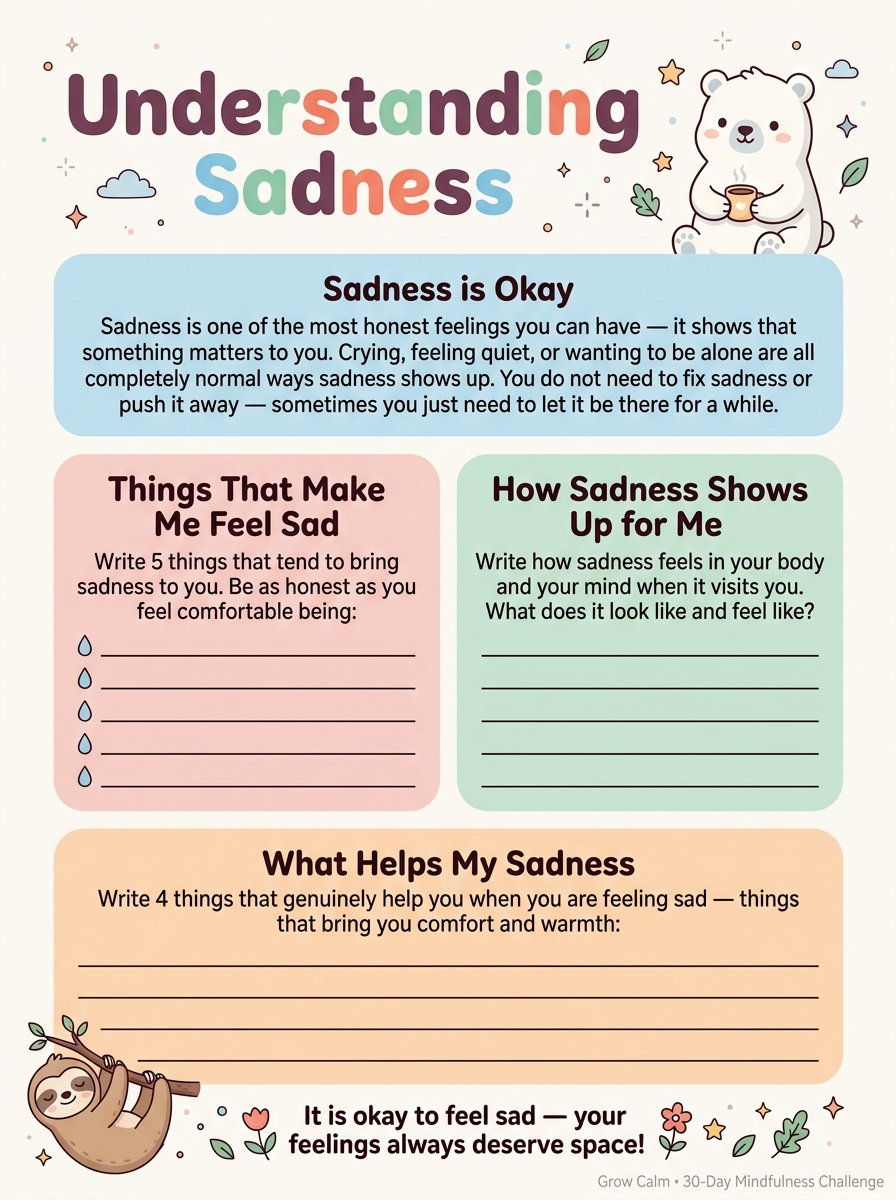
If you'd like a structured way to build these habits, Grow Calm — our 30-day printable mindfulness book for children aged 7–11 — includes a full breathing exercises section with illustrated guides, practice pages, and daily reflection prompts designed to turn these techniques into real habits.
A Note on Anxiety in Children
Breathing exercises are a tool — a very good tool — but they aren't a substitute for professional support when anxiety is significantly affecting a child's life. If your child's anxiety is persistent, intense, or interfering with school or friendships, speaking with your GP or a child psychologist is always the right step.
These techniques are intended to build resilience and give children a moment of agency in the middle of a hard feeling. They work best alongside open conversation, warmth, and the gradual building of emotional vocabulary.
The children who use these tools most effectively aren't the ones who've been told to breathe during a crisis. They're the ones who've practised when things were calm — who know that their breath is always there, always available, always a way back to themselves.
Have a technique that works brilliantly for your child? Every child is different, and the best breathing exercise is the one they'll actually use.
From AuroraPath
Build these habits in 30 days with Grow Calm
Our 96-page printable mindfulness workbook gives children aged 7–11 structured daily practice across five emotional themes — with illustrations, activities, and reflection prompts.
Alex Ewing
Creator of AuroraPath
Alex Ewing created AuroraPath to make premium mindfulness resources accessible for every family. Grow Calm is the first book in the AuroraPath collection.