There's a specific kind of tired that sleep doesn't touch. You can be physically rested — eight hours, a quiet weekend — and still feel it: the dread when the phone rings, the flatness where warmth used to be, the sense that one more person needing one more thing from you might finish you off entirely.
That's emotional exhaustion, and it has a different fuel source than ordinary fatigue — which is why ordinary rest doesn't refill it. Here's what's actually drained, how to recognise the pattern early, and the refilling question that changes everything.
Why Emotional Labour Drains Differently
Emotional labour is the work of managing feelings — yours and other people's. Staying patient with the furious customer. Absorbing a child's meltdown without adding your own. Being the calm one, the listening one, the one who notices. Performing warmth at hour nine of a shift that demanded it from hour one.
Two features make it uniquely draining. First, it's regulation-intensive: every act of staying composed while feeling otherwise — what researchers call surface acting — burns self-control resources, and surface acting is one of the most reliable predictors of emotional exhaustion in the entire workplace literature. Second, it's invisible and unending: physical work has an endpoint you can see; emotional work resets every morning with no evidence it happened. The combination — high cost, no closure, no credit — is the signature recipe.
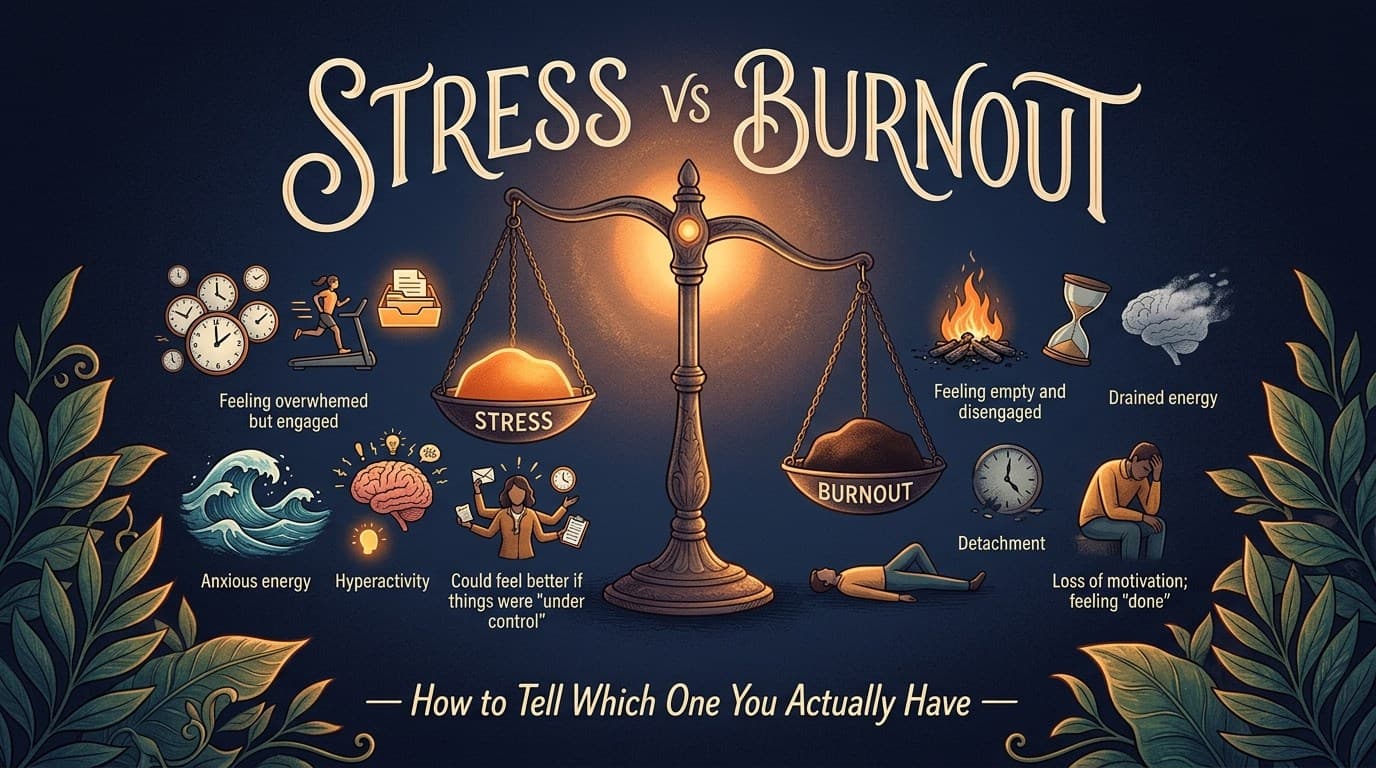
This is also why emotional exhaustion is the core dimension of burnout — the one the other dimensions grow from. (If you suspect you're further along that road, our guide to stress versus burnout walks the full distinction.)
The Symptoms Checklist
Emotional exhaustion announces itself in a recognisable cluster:
- Dread of people — not dislike; dread of the demand. The unread message you can't open. The visit you'd cancel if you could.
- Numbness where feeling used to be — compassion fatigue's flat affect: you say the caring words and feel nothing behind them.
- A hair-trigger for small demands — disproportionate irritation at one more question, one more "quick favour."
- Post-interaction collapse — fine during the meeting/visit/bedtime, hollowed-out the moment it ends.
- The empathy rebound at home — nothing left for the people you love most, who get the depleted remainder of what strangers got the best of.
- Rest that doesn't restore — the diagnostic one. Sleep helps the body; the flatness survives it.
Three or four of these, persisting for weeks, is a pattern worth taking seriously rather than pushing through — pushing through is the mechanism, not the cure.
Who's Most at Risk
The roles where feelings are the job: nurses, teachers, therapists, social workers, customer-facing anything — and the great uncounted category, carers and parents, whose emotional labour runs 24/7 without shift boundaries, supervision, or annual leave. (Parental emotional exhaustion is distinct and well-studied enough that we've given it its own article.) Risk concentrates further wherever the rules of the role forbid authentic feeling — jobs where you must perform unfelt warmth or suppress felt frustration daily. The wider the gap between displayed and actual feeling, the faster the drain.
The Refilling Question: Solitude or Connection?
Here's where generic self-care advice fails people. "Spend time with loved ones!" and "take time for yourself!" are both right — for different depletions — and prescribing the wrong one makes things worse.
If your exhaustion is from output — absorbing, soothing, performing for others all day — you likely need solitude. Not isolation: input-free time where no one's emotional state is your responsibility. A walk alone. An empty kitchen. Twenty minutes where your face can do whatever it wants. People in caring roles often feel guilty taking this; it is not a luxury — it's the specific antidote to the specific drain.
If your exhaustion is from suppression and performance — masking all day, being professionally unreal — you likely need authentic connection. One person with whom zero performance is required, where you can say the unacceptable version out loud. Not advice; witness. This refills what masking drained: the experience of being real and received.
Most emotionally exhausted people need a deliberate mix, and the skill is asking, on any given evening: which one is tonight? The wrong default — the socially exhausted parent forcing themselves to be sociable, the masked professional isolating with their phone — is how people rest constantly and refill never. (Phone-scrolling, note, is neither solitude nor connection; it's low-grade input wearing rest's clothing.)
The Boundary Prescription
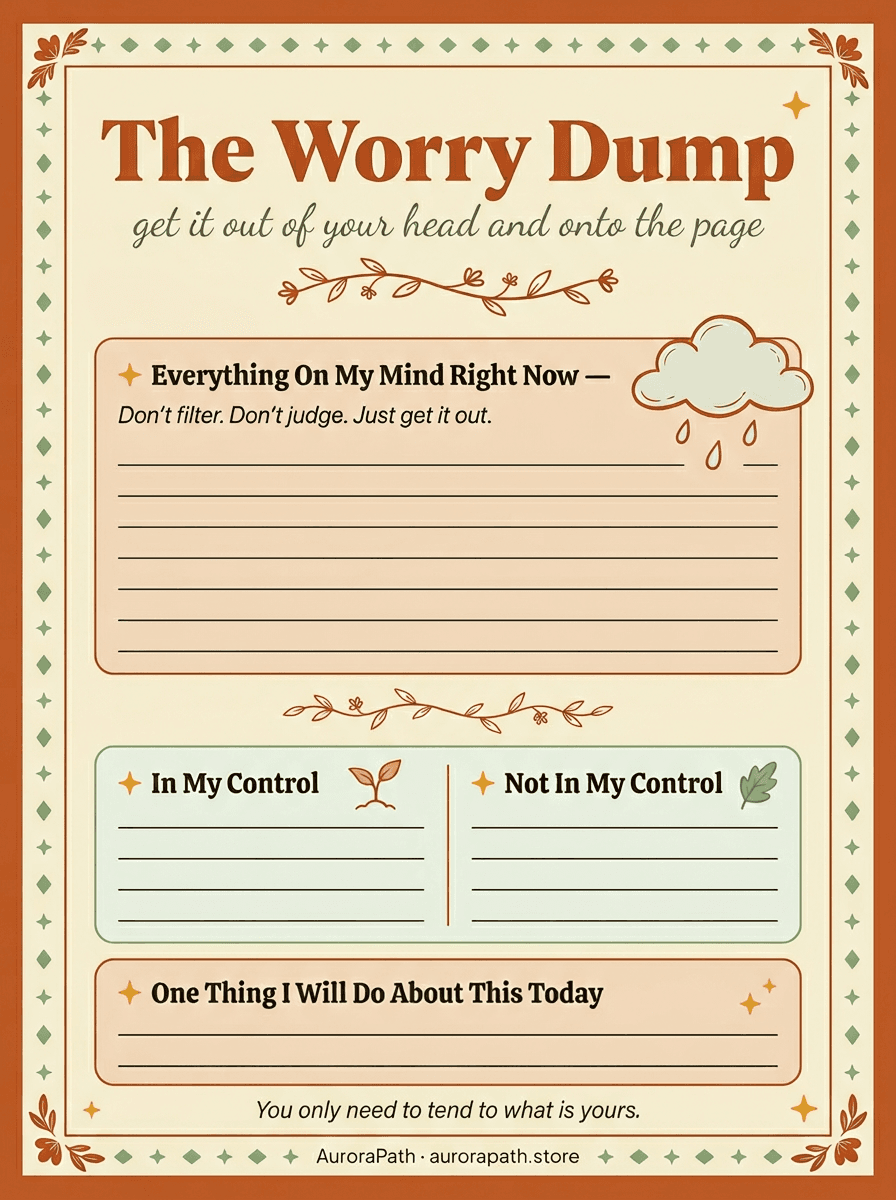
Refilling only works if the tap isn't fully open. Three boundary moves with the best effort-to-relief ratio: close the day — a deliberate end-ritual after which you are off-duty from others' feelings where humanly possible; stop volunteering for invisible labour — being the one who always notices and smooths is a role you can resign from in increments; and put recovery on the calendar before it's desperate — scheduled solitude/connection survives busy weeks, intentions don't. A short daily down-regulation practice underneath it all — ten minutes of breath or body work — lowers the cost of every interaction you can't avoid; the nervous-system toolkit is the place to start.
And the line worth drawing honestly: if the numbness has spread to everything, if nothing brings pleasure, if hopelessness is in the room — that pattern overlaps with depression, and a GP belongs in this story. Emotional exhaustion is real, common, and recoverable; it recovers fastest when it's named early and not carried alone.
Rebuilding from depletion is precisely the arc of Find Your Ground — AuroraPath's 30-day mindfulness journal for adults: soften the system, reconnect with what you actually feel, expand back into your life. Free worksheets at aurorapath.store.
From the AuroraPath Store
Grow Calm
A 30-day mindfulness challenge for kids aged 7–11. 96 beautifully illustrated pages — instant download.
$15.99
Get Grow Calm →Instant PDF download · Print at home
Alex Ewing
Creator of AuroraPath
Alex Ewing created AuroraPath to make premium mindfulness resources accessible for every family. Grow Calm is the first book in the AuroraPath collection.