
Emotional regulation is one of those terms that gets used a lot and explained clearly almost never.
Most articles tell you that emotional regulation is important. That you should develop it. That mindfulness helps. They rarely explain what it actually is at a neurological and psychological level — which matters, because understanding what you are actually trying to do makes it significantly easier to do it.
Here is a clear honest account of what emotional regulation is, why some people find it genuinely harder than others, and what actually works to improve it.
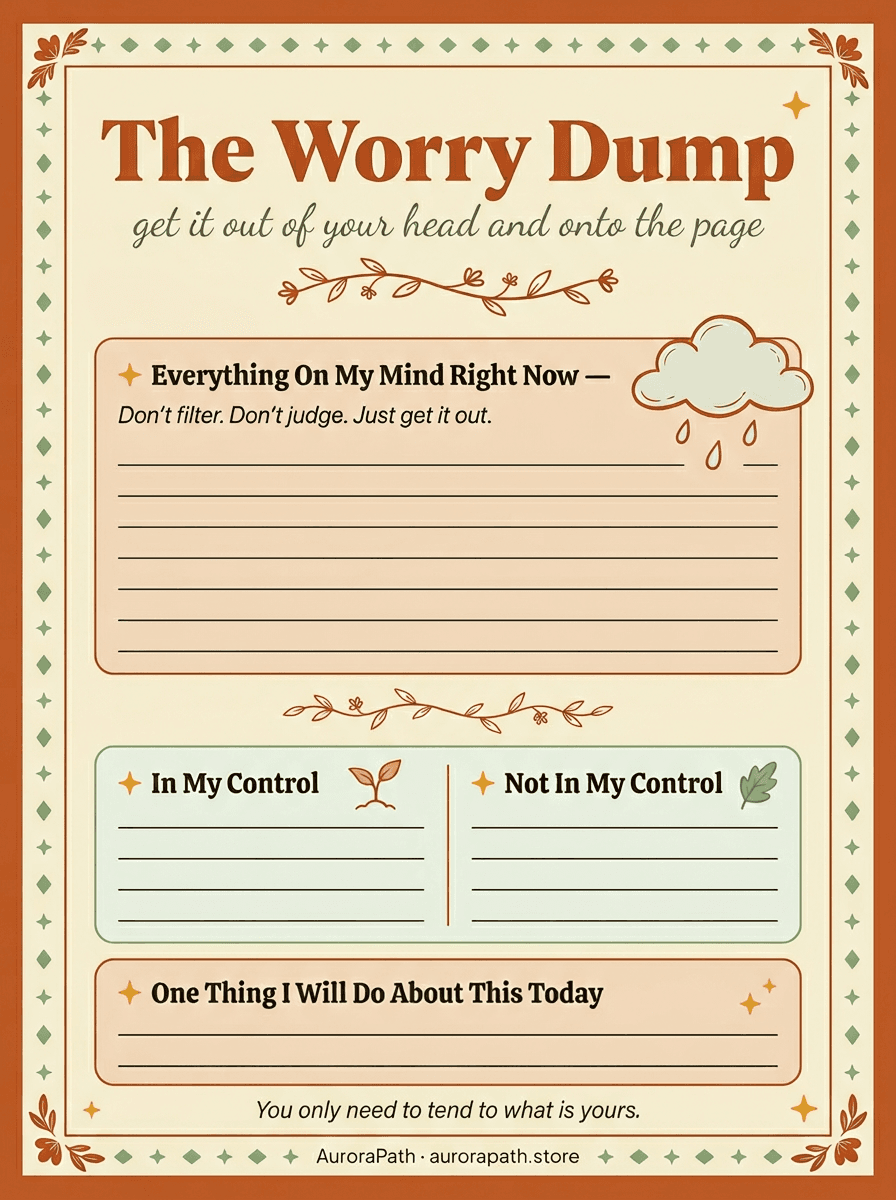
What Emotional Regulation Actually Means
Emotional regulation does not mean not feeling things. It does not mean being calm, or stoic, or unaffected by difficulty. It does not mean having your emotions under control in the sense of being suppressed or hidden.
Emotional regulation is the ability to influence which emotions you experience, when you experience them, and how you express them — in ways that serve your wellbeing and your relationships rather than undermining them.
A well-regulated person feels the full range of human emotion. They get angry, sad, anxious, overwhelmed. What they can do that a less-regulated person cannot is modify the intensity of those experiences when necessary, recover from them more quickly, and express them in ways that do not damage their relationships or create secondary problems.
The key word throughout is influence — not control. Emotional regulation is not about dominating your emotional life. It is about having enough agency within it that you are not entirely at its mercy.
The Neuroscience — Why Some People Find This Harder
Emotional regulation happens primarily in the prefrontal cortex — the part of the brain responsible for executive function, perspective-taking, impulse control, and reasoning. The prefrontal cortex can modulate the activity of the amygdala — the brain's threat detection and emotional response centre — when it has sufficient resources and when the emotional activation is not too intense.
Several things affect how well this works.
Early attachment and development. The capacity for emotional regulation is not innate — it is developed through a process called co-regulation, in which a regulated caregiver helps a child's nervous system develop its own regulatory capacity. Children who had consistent, attuned caregiving develop stronger regulatory capacity than those whose early environment was chaotic, threatening, or emotionally unavailable. This is not destiny — the brain retains plasticity throughout life — but it does explain why some adults find emotional regulation significantly more difficult than others without any personal failing being involved.
Stress and resource depletion. The prefrontal cortex requires resources — adequate sleep, nutrition, low baseline stress — to function effectively. When we are chronically depleted the regulatory capacity of the prefrontal cortex is genuinely reduced. This is why emotional regulation is harder when we are tired, hungry, or under sustained stress. It is not weakness. It is neuroscience.
Trauma. Traumatic experiences — particularly repeated or early ones — can alter the baseline sensitivity of the amygdala and reduce the effectiveness of prefrontal regulation. People with trauma histories often experience more intense emotional responses and find regulation more effortful. This is a physiological consequence of adverse experience, not a character flaw.
Temperament. Some people are born with more reactive nervous systems than others — higher amygdala sensitivity, stronger physiological responses to emotional stimuli. This is not pathology. It is variation. But it does mean that emotional regulation requires more deliberate effort for some people than others.
The Strategies That Actually Work
Research on emotional regulation identifies several strategies with strong evidence of effectiveness. They are not all equally useful for all situations — understanding when to use which one is part of developing genuine regulatory skill.
Cognitive reappraisal. This is the most researched and consistently effective emotional regulation strategy. It involves changing how you interpret or think about an emotionally activating situation — not denying the reality of what is happening but finding a different frame through which to understand it.
I failed this exam can be reappraised as I learned what I do not know yet and now I know where to focus. They did not reply to my message can be reappraised as they are probably busy rather than deliberately ignoring me. This situation is completely out of my control can be reappraised as I can focus on what I can influence rather than what I cannot.
Reappraisal is not toxic positivity — it is not pretending that bad things are secretly good. It is finding a more accurate and useful frame than the catastrophic one the reactive brain tends to generate automatically.
Expressive writing. Writing about difficult emotional experiences in an expressive, exploratory way — not just describing what happened but exploring how it felt and what it means — produces measurable reductions in emotional distress and improvements in wellbeing. Psychologist James Pennebaker's research on expressive writing has consistently found that writing about difficult experiences for fifteen to twenty minutes on three or four occasions produces lasting improvements in emotional processing.
The mechanism appears to be narrative integration — the process of organising fragmented emotional experience into a coherent story reduces its emotional charge and makes it more processable.
Mindful awareness. The ability to observe emotional experience from a slight distance — to notice that you are angry rather than being consumed by the anger — is a foundational regulatory skill. Mindfulness builds this capacity through consistent practice of attending to experience without being swept away by it.
Labelling emotions — putting words to what you are experiencing — produces a measurable reduction in amygdala activity. The simple act of saying or thinking I am feeling angry right now activates the prefrontal cortex and begins the regulatory process. This is sometimes called affect labelling and it is one of the most direct and immediate emotional regulation tools available.
Physical regulation. The emotional regulation system is embodied — it lives in the body as much as in the mind. Physical interventions directly modulate the nervous system and can produce faster regulation than purely cognitive approaches.
Exercise reduces cortisol and produces endorphins. Cold water on the face activates the dive reflex and produces rapid parasympathetic activation. Slow diaphragmatic breathing directly influences heart rate variability — a key marker of nervous system regulation. Progressive muscle relaxation — deliberately tensing and releasing muscle groups — addresses the physical tension that accompanies emotional activation.
When emotional activation is intense physical regulation often needs to come before cognitive regulation can work. You cannot think your way out of a flooded nervous system. You have to move through it first.
Social co-regulation. Humans are profoundly social animals and our nervous systems are designed to regulate through connection with other regulated nervous systems. Talking to a trusted person about something difficult — not to solve it but simply to be heard and understood — produces genuine physiological regulation. Physical contact with someone safe activates the oxytocin system and directly reduces cortisol.
This is not weakness. It is biology. We are not designed to regulate alone.
Building Regulatory Capacity Over Time
The strategies above are useful for managing emotional states in the moment. But regulatory capacity itself — the baseline ability to modulate emotional experience — is built over time through consistent practice.
Mindfulness practice, done regularly, literally changes the structure and function of the prefrontal cortex and reduces baseline amygdala reactivity. Studies of long-term meditators show measurable differences in brain structure compared to non-meditators — thicker prefrontal cortex, reduced amygdala volume, stronger connectivity between regulatory and reactive brain regions.
These changes do not require years of intensive practice. Research by neuroscientist Sara Lazar found measurable cortical thickening in people with an average of nine years of practice and forty minutes per day. Other research suggests meaningful changes begin earlier.
The investment in a consistent mindfulness practice is an investment in the physical structure of your regulatory capacity. It takes time. It is genuinely worth it.
Related reading: nervous system regulation exercises and how to stop overthinking.
AuroraPath creates premium mindfulness resources for adults and children. If you want a structured way to build regulatory capacity day by day, Find Your Ground — our 30-day mindfulness journal for adults — was designed for exactly that. Our free collection of 10 mindfulness worksheets is also available as an instant free download at aurorapath.store.
From the AuroraPath Store
Find Your Ground
A 30-day mindfulness challenge. 90 beautifully designed pages — instant download.
$19.99
Get Find Your Ground →Instant PDF download · Print at home
Alex Ewing
Creator of AuroraPath
Alex Ewing created AuroraPath to make premium mindfulness resources accessible for every family. Grow Calm is the first book in the AuroraPath collection.