
The body scan is the practice everyone skips. Breath meditation has the prestige, walking has the accessibility, and the body scan — lying still, moving attention slowly from scalp to toes — sounds suspiciously like an elaborate nap. It gets treated as the beginner's warm-up before the "real" practices.
This is backwards. The body scan trains the single most underrated capacity in emotional life — and it happens to be the practice with some of the strongest clinical pedigree, sitting at the heart of the original mindfulness-based stress reduction programme. Here's what it actually does, a complete script, and honest answers to the three things that go "wrong."
What You're Actually Training: Interoception
Interoception is the sense of your body's internal state — the felt data of tightness, warmth, hunger, heaviness, flutter. It's how emotions physically arrive: anxiety is (among other things) chest-tightness and stomach-flutter; anger is heat and jaw; exhaustion is the heaviness you've been overriding since Tuesday.
Most adults have spent decades training themselves out of this sense — overriding tiredness, eating past fullness, discovering only at the massage therapist's that their shoulders have been up by their ears for a month. The cost is real: you can't regulate what you can't detect, and emotion research keeps finding that people with better interoceptive accuracy regulate feelings better. They get the early, quiet signal — tension rising — while it's still a whisper, instead of the late loud one.
The body scan is interoception practice, rep by rep. Nothing mystical: you point attention at the left foot, you find out what's actually there, you move on. Done regularly, the body starts reporting in earlier and more clearly — which is the upstream skill underneath emotional regulation itself.
The Ten-Minute Script
Lie on your back — bed, floor, sofa — arms loose, or sit if lying guarantees sleep. Read this through once first, or record it slowly on your phone.
Three slow breaths, letting the exhale be long. Let the body be heavy — the floor is doing the holding now.
Bring attention to the top of the head. You're not looking for anything special — just whatever's there. Tingling, warmth, nothing-much. Nothing-much counts.
Slowly down: forehead… any holding there? Eyes… jaw — the jaw is usually holding something; you don't have to fix it, just know about it.
Neck and shoulders. Notice without adjusting first — what's the actual state of them, before you improve it? Now, if they want to drop, let them.
Down the arms — upper arms, elbows, forearms — to the hands. Find all ten fingers from the inside, without moving them.
The chest. Feel it rise and fall on its own for three breaths. The belly — soft or braced?
The back — the whole map of contact with the surface beneath you. Heavy is good.
Hips… thighs… knees… shins… and the feet. Heels on the surface, the soles, all ten toes from the inside.
Now the whole body at once — one connected, breathing thing. Rest there for the last minute.
When the mind wanders — every few seconds, possibly to your tax return — that's not interference, that's the rep: notice, and return to wherever you left off. Forty wanders is forty reps.
The Three Things That Go "Wrong" (All Fine)
"I can't feel anything in my feet/legs/anywhere." Completely normal, especially early — numbness is what an untrained sense reports. Treat nothing-much as a legitimate finding and move on; the resolution sharpens over weeks, like eyes adjusting to dark. If anything, blankness is the proof you needed the practice.
"I fall asleep every time." The body scan is powerfully downregulating — falling asleep means it worked, just at the wrong target. If sleep isn't the goal: practise sitting up, earlier in the day, eyes half-open. If sleep is the goal — congratulations, you've found one of the best non-drug pre-sleep tools in existence; see the variation below.
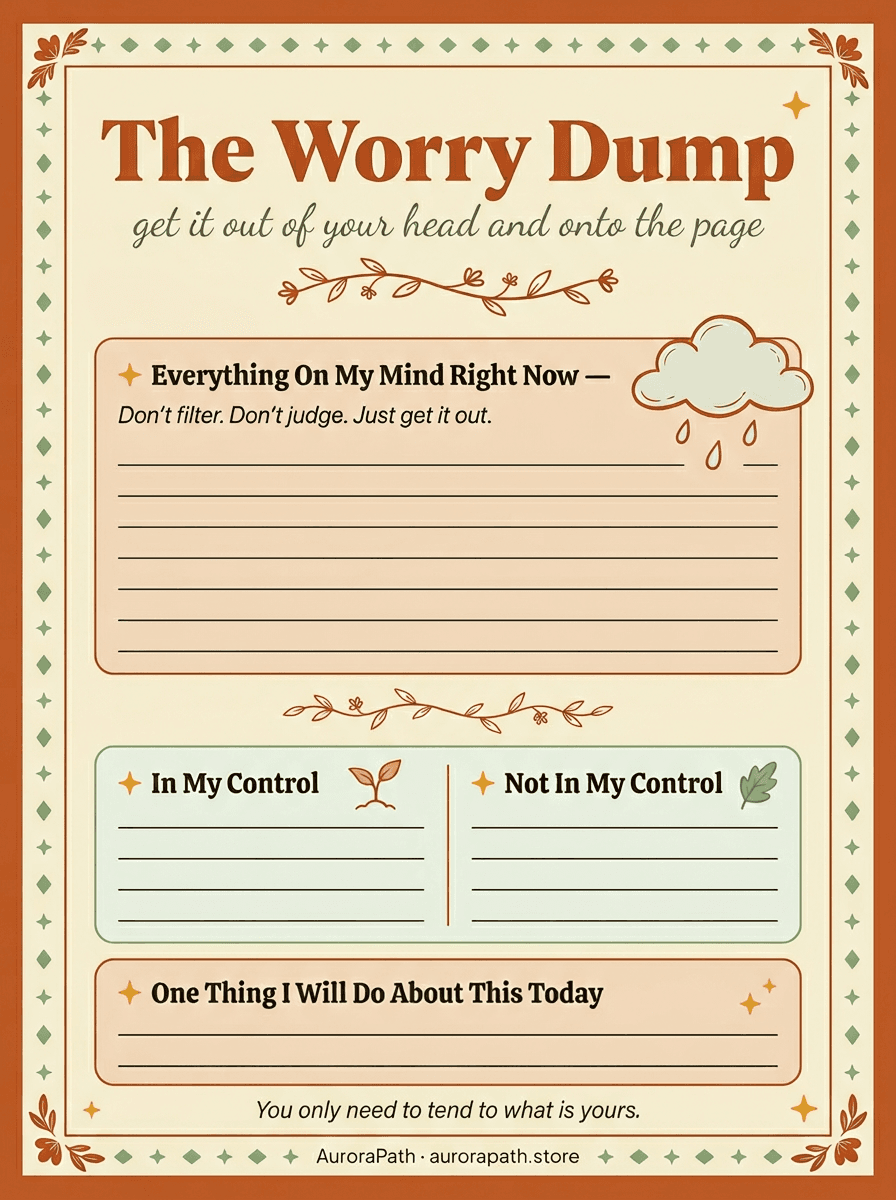
"I found pain/discomfort and now I'm fixated on it." The scan's instruction for discomfort is the interesting one: investigate rather than flee. What are its actual edges? Does it pulse, drift, change? This is precisely the mechanism behind the body scan's longest-standing clinical use — chronic pain programmes — where the goal isn't deleting sensation but unwinding the resistance and alarm wrapped around it, which is often the larger share of the suffering. (For acute distress rather than chronic pain, ground first — the toolkit is here — and keep scans short.)
Three Variations
The one-minute scan. Standing or sitting, anywhere: crown → jaw → shoulders → hands → belly → feet, two seconds each, like a lift descending. Use before meetings, after calls, in queues. This is the portable version and honestly the one you'll use most — a perfect addition to a five-minute practice rotation.
The walking scan. Attention moves through the body while you walk — feet for a minute, then legs, then shoulders, then the whole moving frame. For people who can't do lying-still, this is the same training in motion.
The pre-sleep scan. The classic script, in bed, deliberately surrendering to the sleepiness instead of fighting it — most people are gone by the knees. Slower is better; pair it with the worry-offload from our sleep guide on loud-brain nights.
Dose-wise: ten minutes, three or four times a week, beats a weekly half-hour — same consistency rule as everything else in this field. Give it three weeks before judging; interoception improves quietly, and the first sign is usually odd and small, like noticing your shoulders rising during the difficult email rather than the day after.
The body scan anchors the first phase of Find Your Ground — AuroraPath's 30-day mindfulness journal for adults — where settling the body comes before everything else, on purpose. Free worksheets at aurorapath.store.
From the AuroraPath Store
Find Your Ground
A 30-day mindfulness challenge. 90 beautifully designed pages — instant download.
$19.99
Get Find Your Ground →Instant PDF download · Print at home
Alex Ewing
Creator of AuroraPath
Alex Ewing created AuroraPath to make premium mindfulness resources accessible for every family. Grow Calm is the first book in the AuroraPath collection.