Your child is worried — about the spelling test, the sleepover, the dog next door, something at school they can't quite explain — and you can feel the words queuing up in your mouth: Don't worry. It'll be fine. There's nothing to be scared of.
Every parent says these things. They come from pure love. And they reliably make anxious children more anxious — which is one of parenting's crueller little ironies. Here's why the comforting words backfire, the two-step formula that works instead, and a set of word-for-word scripts for the moments that come up most.
Why "Don't Worry" Backfires
To an anxious child, "there's nothing to worry about" carries two unintended messages. First: you shouldn't be feeling what you're feeling — which adds shame to fear and teaches them to hide worries rather than bring them to you. Second, and more subtly: I'm not taking this seriously — which means the one person who could make this feel safer has just declined the job.
Anxiety also doesn't respond to verbal reassurance for a mechanical reason: a frightened nervous system is taking its cues from tone, faces, and bodies — not from the logical content of sentences. A child can hear "it's fine" fifty times and remain unconvinced, because the alarm isn't running on logic.
What does reach the alarm: feeling understood (which signals safety) and feeling accompanied (which divides the load). That's what the formula below delivers.
The Formula: Validate, Then Anchor
Step one — validate the feeling (without endorsing the fear). Name what they're feeling and make it legitimate: "You're really worried about tomorrow. That makes sense — new things feel wobbly." Validation is not agreement that the feared thing is dangerous. It's confirmation that the feeling is real and allowed. Naming feelings isn't just kindness, either — putting words to an emotion measurably reduces the brain's alarm response. It's the closest thing to magic in this whole area.
Step two — anchor to capability or plan (without taking over). Having joined them in the feeling, point gently at solid ground: a past success, a concrete plan, a tool, your presence. "And — remember the first week of swimming? Your tummy said no and you did it anyway. Your brave is bigger than your tummy thinks."
Validate, then anchor. Feeling first, plan second. Reversing the order — jumping straight to plans — is just "don't worry" wearing a clipboard.
Twelve Phrase Swaps
| Instead of… | Try… |
|---|---|
| "Don't worry." | "Something feels worrying. Tell me about it." |
| "There's nothing to be scared of." | "It feels scary to you, and feelings are allowed. Let's look at it together." |
| "It'll be fine." | "Whatever happens, we'll handle it — you and me." |
| "Calm down." | "Let's do a slow breath together. I'll go first." |
| "You're overreacting." | "This feels really big right now. Big feelings pass — I'll stay while it does." |
| "Be brave." | "Being brave means doing it with the wobbly feeling. You've done that before." |
| "What's wrong with you today?" | "Something's hard today. You don't have to explain it perfectly." |
| "You were fine last time!" | "Last time your worry was wrong about how it would go. Worries guess wrong a lot." |
| "Stop thinking about it." | "Let's put the worry somewhere — want to draw it or tell it to me so I can hold it tonight?" |
| "Hurry up, we're late!" (morning panic) | "We have time. One breath, shoes, then I'll race you to the car." |
| "You'll love it once you're there." | "The first ten minutes might feel wobbly. After that it usually gets easier. I'll be back at three." |
| "Why are you crying?" | "Tears are okay. I'm right here. Words can come later." |
A pattern worth noticing: nearly every "try" line does one of three things — names the feeling, externalises the worry as a thing separate from the child ("your worry guessed wrong," not "you were wrong"), or promises accompaniment rather than outcomes. Promising outcomes ("nothing bad will happen") is a trap; you can't guarantee them and anxious kids keep score. Promising partnership ("we'll handle it") is always keepable.
Scripts for the Big Three Situations
School mornings. Keep it brief, warm, and forward-moving — long negotiations feed the spiral. "Your tummy's saying no this morning. I know. We're still going, and here's what I know: by snack time it almost always feels better. One slow breath — okay, shoes." (If school worry is a near-daily pattern, our deeper guide to school anxiety in children is the companion piece.)
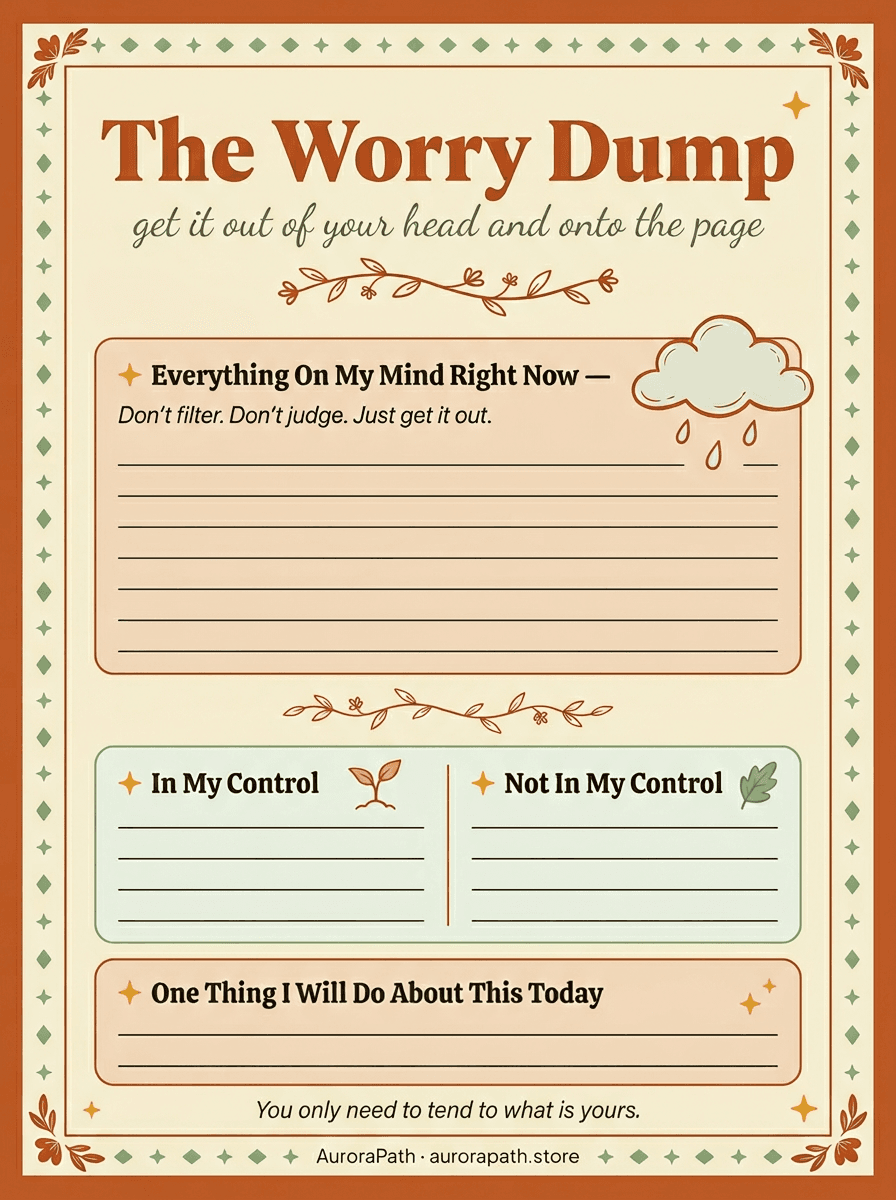
Bedtime worries. Night is when worries get loud — distractions gone, tired brain, dark room. The script that helps most pairs validation with a container: "Tell me the worry. I'm going to write it down and keep it on my desk tonight — my job now, not yours. We'll decide about it in the morning." For repeat offenders, a worry-dump ritual before the wind-down changes bedtime more than any single phrase.
Before new things. Forecast honestly, in kid-sized portions: "Here's what will happen: we'll arrive, it might feel weird for a bit — that's normal — you'll find one thing to do, and I'll be back after lunch. Which part should we make a plan for?" Anxious kids do better with an honest "the start might feel wobbly" than with "you'll love it!" — because when the wobble comes, your credibility is intact.
The Part That Isn't Words
One last thing, because scripts only carry half the load: your nervous system talks louder than your sentences. A tight-jawed, rushed parent saying perfect validating phrases still broadcasts alarm. Before the conversation, take the slow exhale yourself. Get low, get eye-level, slow your voice down ten percent. Co-regulation — your calm body lending steadiness to theirs — is the delivery mechanism for everything above.
And the standard line we mean every time: these tools are for everyday worries. Anxiety that is intense most days, interferes with school, sleep or friendships, or keeps growing across months deserves a conversation with your GP or a child psychologist — with these scripts continuing to help alongside.
Giving children their own toolkit — naming feelings, breathing through wobbles, talking back to worries — is exactly what Grow Calm, our 30-day printable mindfulness book for children aged 7–11, was built to do, one illustrated day at a time. Our free collection of 10 mindfulness worksheets is an instant free download at aurorapath.store.
From the AuroraPath Store
Grow Calm
A 30-day mindfulness challenge for kids aged 7–11. 96 beautifully illustrated pages — instant download.
$15.99
Get Grow Calm →Instant PDF download · Print at home
Alex Ewing
Creator of AuroraPath
Alex Ewing created AuroraPath to make premium mindfulness resources accessible for every family. Grow Calm is the first book in the AuroraPath collection.